Founding narrative
Barrister Adebisi Adegbuyi served as Postmaster General of Nigeria from 2016 to 2019. In that role, he encountered, in the most direct institutional terms, the single most consequential infrastructure gap in Nigerian governance: the absence of a universal, machine-readable address system. Without addresses, postal services fail. Without addresses, tax authorities cannot locate properties. Without addresses, banks cannot verify customers. Without addresses, governments cannot deliver services. The problem was not technical. It was foundational.
In 2019, he was removed from the NIPOST role. The conventional response would have been to walk away. Instead, the period that followed — through COVID-19, through isolation, through institutional exclusion — became the most productive phase of his career. Working without institutional backing or external funding, the full architecture of what would become GRANDVIEW GRIDS (G2) was designed, the AIG-CTG tessellation system was formalised, the trust layer was specified, and the IP portfolio was built. The motto of the project reflects the spirit of that period: "Extracting Prosperity from Adversity since 1961."
That resilience is the most defensible competitive moat of this project. The architecture was not designed by a team responding to a tender brief. It was designed by a former Postmaster General who had personally confronted the failure mode, been removed for pursuing solutions, and spent years refining the answer in obscurity. No competing initiative carries that provenance.
The result is a seven-layer sovereign addressing infrastructure — AIG-CTG for deterministic addressing, CRYLID · CRYLOID · CRYPLOID for trust verification, NiNja Mapping for geospatial intelligence, and six companion modules — now FEC-mandate-aligned and ready for nationwide deployment under TGIF stewardship. The adversity was the incubator. The prosperity is the infrastructure.
Founding vision
GRANDVIEW GRIDS (G2) rests on a coherent ideological foundation: Digital Federalism and the application of cooperative federalism principles to digital infrastructure design. Its intellectual lineage traces from Hegel's concept of the state as the realisation of ethical life, through Obafemi Awolowo's federalist vision for Nigerian governance, to the architectural model developed by Barrister Adebisi Adegbuyi for the GRANDVIEW ecosystem.
The core insight is simple: Nigeria cannot be governed from the top down. The 774 Local Government Areas are the bedrock unit of governance, service delivery, and civic identity. Any national digital infrastructure that ignores this reality will fail — as every top-down addressing initiative before this one has.
AIG-CTG is therefore designed from the LGA node upward. Each LGA is a sovereign addressing authority within its domain. The national system is a federation of these local authorities — not a central database with local branches.
// Under TGIF stewardship
Nigeria’s sovereign infrastructure.
Governance layer, milestone payment structures, NDA controls, and stakeholder engagement machinery for sovereign-grade digital infrastructure.
Get in touchOn the pen name “Digital Bismark”
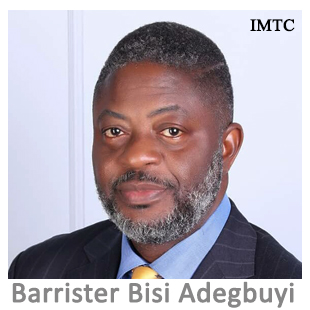
Published op-eds and policy commentary by Barrister Adebisi Adegbuyi appear under the byline Digital Bismark (note: one ‘c’). The name is a mark of trust and strategic counsel a reference to statecraft and the art of building durable institutions, not to the German chancellor. Readers arriving from press or policy publications under that byline are reading the work of the founder of GAIN Ltd and the architect of the GRANDVIEW ecosystem.
Design principles
Nigeria's reform agenda requires a universal, machine-readable address and verification substrate. Digital infrastructure is not a product feature. It is the enabling condition for every other reform.
The GRANDVIEW model starts with Local Government Authorities and builds upward. Federated autonomy at the LGA level, national uniqueness at the top. This is cooperative federalism applied to digital infrastructure.
Government dependency is minimised before scale. CRYLID · CRYLOID · CRYPLOID pilots in insurance, pensions, and telco generate proof, cashflow, and credibility — creating the evidence base that attracts public-sector adoption.
Complexity creep is the primary risk. Every module is built to minimum viable specification, validated by measurable KPIs, and expanded only in response to proven demand.
History
2016–2019
As Postmaster General of Nigeria, Barrister Adebisi Adegbuyi identifies Nigeria's addressability gap as the root infrastructure deficit blocking inclusive governance, revenue collection, and service delivery. The Grandview innovation estate is conceived.
2019–2020
Following removal from the NIPOST role, the research and development work continues in isolation through the COVID-19 period. This forced pause becomes the most productive phase of the project — the full ecosystem architecture is drawn, the AIG-CTG tessellation system is formalised, and the motto "Extracting Prosperity from Adversity since 1961" is established as the founding spirit.
Architecture
The AIG-CTG (Address & Identity Granularity — Codes, Tiles & Grids) / G-DAPS (Grassroots Digital Address & Identity Network Address Patented Solution) deterministic addressing framework is developed as a bottom-up, LGA-centric pyramidal system built for cooperative federalism.
Ecosystem build
The trust layer (CRYLID · CRYLOID · CRYPLOID / DTM / CTM) and sector modules are specified and built. Role separation — Digital Trust Mark (DTM) / Digital Trust Map (DTM2) as front-end, CRYLID as backend, CTM as services — is codified to prevent module duplication.
March 2026
FIPO grants a portfolio of Nigerian patents covering the GRANDVIEW ecosystem, including the seven-layer deterministic geospatial grid infrastructure system and companion AI broadcast generation and authentication system. The IP portfolio establishes sovereign ownership of the core architecture.
11 May 2026
Under TGIF stewardship, GRANDVIEW GRIDS (G2) launches as the digital flagship of the GRANDVIEW ecosystem. Private sector CRYLID · CRYLOID · CRYPLOID pilots open. The national narrative is established.
Stewardship
GRANDVIEW GRIDS (G2) is launched and operated under TGIF (The Grandview Innovation Foundation) stewardship providing the governance layer, milestone payment structures, NDA controls, and stakeholder engagement machinery required for a sovereign-grade digital infrastructure initiative.
Intellectual property
All GRANDVIEW GRIDS (G2) ecosystem modules — AIG-CTG, CRYLID · CRYLOID · CRYPLOID, DTM / DTM2, CTM, NiNja Mapping, GRANDVIEW PROTIVA, ABISO-LOGIN, AIA are the original intellectual property of GAIN Ltd under TGIF stewardship. All core algorithms and cryptographic verification chains are proprietary and closed.
IP and licensing enquiries